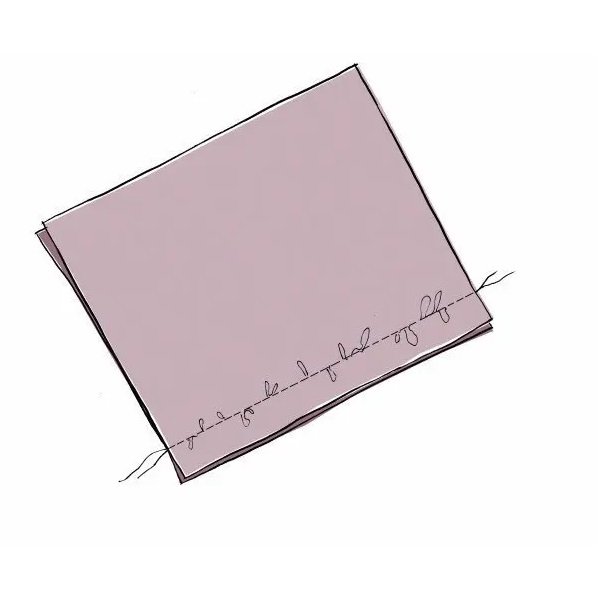
This walking foot guide is written by Emma Thompson, the founder of the former Sandpiper Sewing School based upon their popular walking foot class.
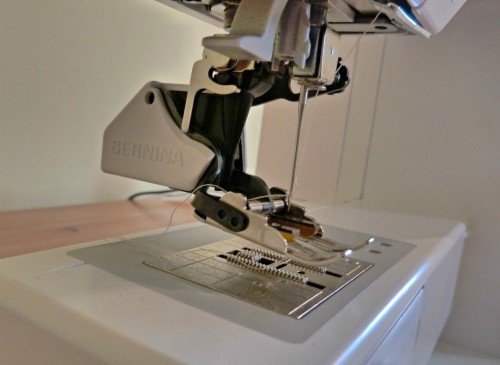
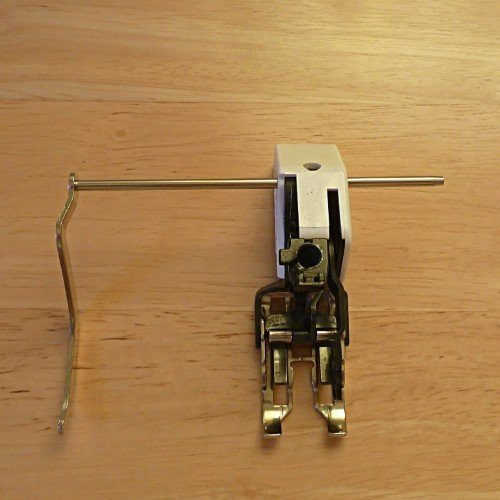
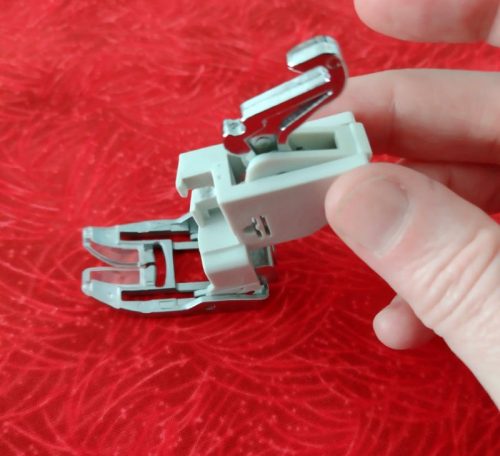
The Walking foot, (also referred to as Even feed, or Dual feed foot) is a presser foot that helps prevent multiple layers of fabric slipping when they are sewn together. It is commonly used for quilting, but is also useful for bag making and when sewing slippery fabrics.
The walking foot works by having it’s own set of feed dogs. As your machine needle moves up & down, a lever which clips to the needle bar lets the walking foot’s feed dogs move/walk along the fabric, hence the name walking foot. The fabric is therefore evenly fed through your machine.
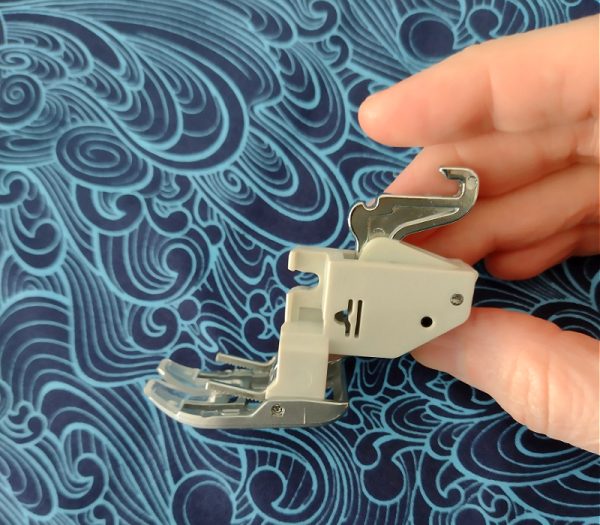
Some machines come with built in dual feed feet, these have different names (e.g. IDT, AcuFeed) depending on the sewing machine brand. If you need help with fitting your walking foot there are guides on YouTube, such as this one for attaching a Janome walking foot and this for installing a Brother walking foot.
The walking foot can be used for any project where fabrics are likely to slip, and is most commonly used for:
- Lighter weight knit fabrics, to prevent stretching
- Perfect pattern matching e.g. on plaid fabrics
- Quilting where it helps to ensure that the layers of a quilt do not shift when they are quilted together.
- Bag making, where you may be sewing multiple layers of fabric together.
Using the Walking foot for quilting
The most commonly used methods for quilting with a walking foot are;
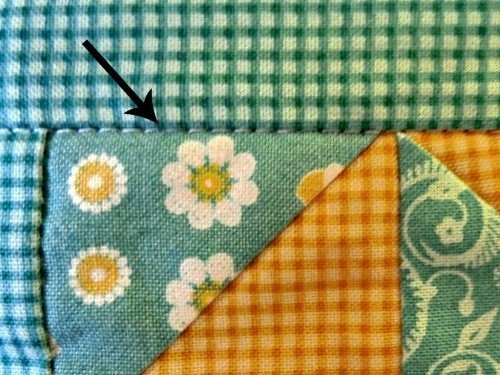
1. “In the Ditch” in the seam
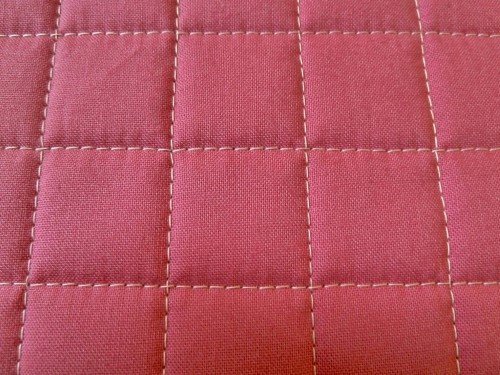
2. Grid lines
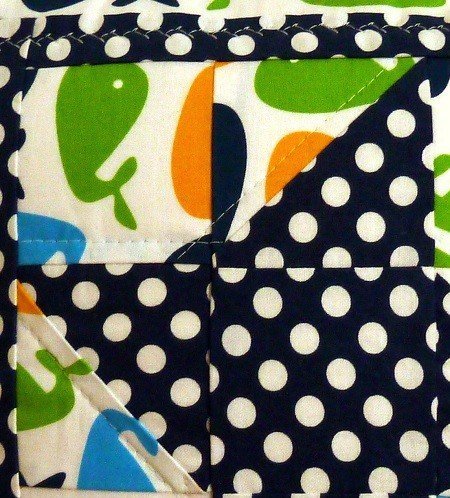
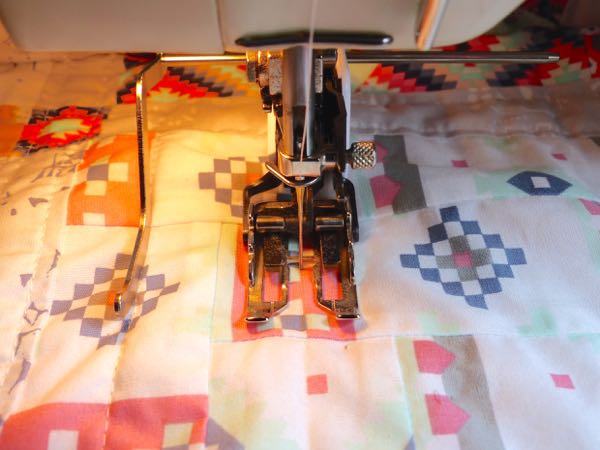
3. Echo quilting around your blocks, as done around the friendship star block below
We have a detailed guide to stright line quilting using your walking foot here.
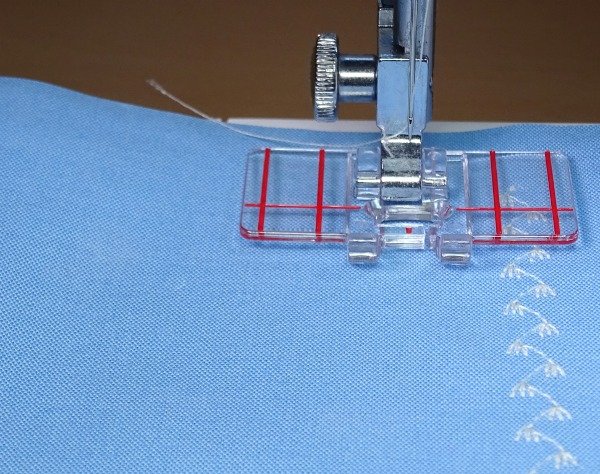
The walking foot also often has a guide bar to help you to keep an even distance between quilt lines.
There are lots of creative ways you can use your walking foot for quilting using your machine’s practical and decorative stitches. For example:
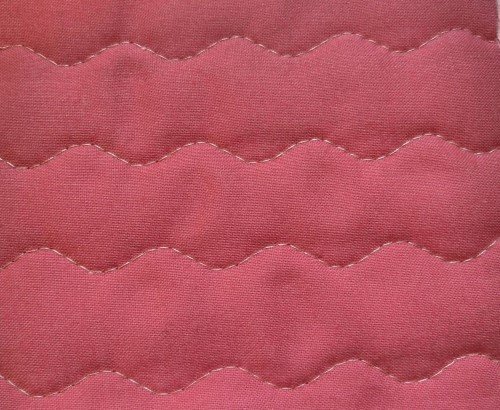
Running Stitch / Serpentine Stitch
If your machine doesn’t have this stitch you could you the 3 step Zig Zag which gives you a pointy version of this effect.
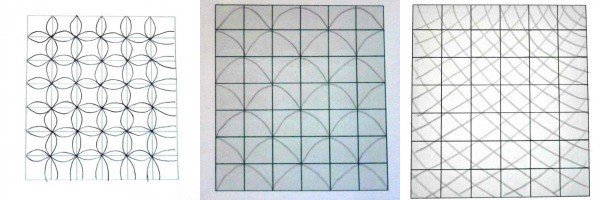
Gentle curves work really well with the walking foot, grab some graph paper and plan out some patterns. Here’s some ideas for you:
For other sewing machine feet guides pop over to our techniques section and click on ‘sewing machines’.